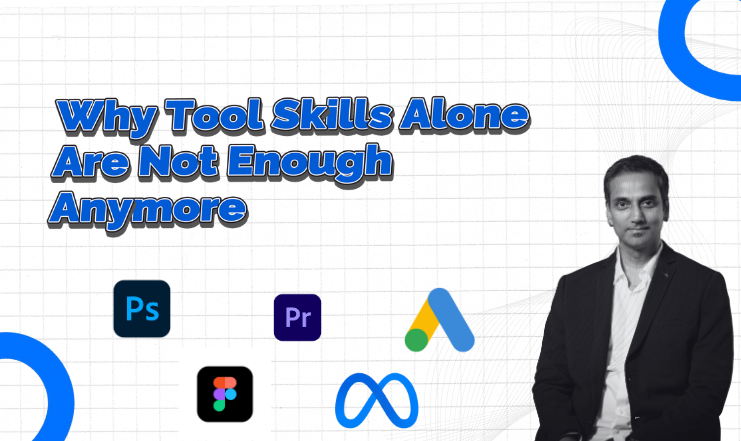

For years, creative careers followed a simple formula.
Learn the software. Build a portfolio. Get a job.
If you knew Photoshop, Premiere Pro, Figma, Meta Ads, or Google Ads better than most people, you had an edge. The formula worked.
But not anymore.
What Changed
In 2023, AI arrived — not as a distant future concept, but as an everyday reality.
Today, AI can generate logos, edit videos, write ad copy, build landing pages, and design UI screens in seconds. Tools that once took months to master became one-click automations. Skills that got you hired became common overnight.
This is not a prediction about the future. It is already happening.
And here is the uncomfortable truth: if a tool can do what you do, you are not indispensable. You are a middle step waiting to be removed.
The real question is no longer “which tools do you know?”
It is: “When the tools run out of answers — what do you do?”
The Problem Is Not Lack of Skill
Most students and professionals are still approaching careers the old way.
They think: learn another software, get another certificate, watch another tutorial, add another tool to the resume.
There is nothing wrong with learning tools. Tools still matter.
But tools are becoming commodities.
When AI can create a social media design in 20 seconds, your value is no longer in making the design. Your value is in knowing:
- What message should it communicate?
- What emotion should it trigger?
- What problem is it actually solving?
- Why will people care?
- Why is this idea better than ten other ideas?
That is not execution. That is thinking.
Here is what most creative education never teaches: the difference between making things and deciding what is worth making. Schools teach software. Courses teach delivery. Almost nobody teaches the thinking that happens before any of that begins.
So when someone asks “Why did you do it this way?” — the honest answer from most professionals is: “It felt right.” Or “I saw someone else do it.” Or “It looked good.”
That is not thinking. That is surface execution. And surface execution is exactly what AI does better than you.
AI Is Replacing Execution. Not Decision-Making.
AI is becoming very good at surface-level work.
It can follow instructions. Imitate styles. Generate options. Automate repetitive tasks. But AI still cannot decide:
- Which problem is worth solving
- Which direction is strategically stronger
- Which message will emotionally connect
- Which idea will actually be remembered
That is still human work.
A designer who only knows software may struggle. A designer who understands psychology, storytelling, and business thinking becomes far more valuable.
A marketer who only runs ads may become replaceable. A marketer who understands positioning, customer emotion, and audience behaviour becomes indispensable.
Technical skills get you hired for junior roles — “Can you execute this brief?”
Cognitive skills get you promoted to leadership roles — “Can you decide what the brief should be?”
Companies can teach tools. They cannot easily teach thinking. And when someone shows strong thinking ability, they get trusted with strategy decisions, team leadership, client relationships, and direction-setting. That is where salaries jump. That is where careers take off.
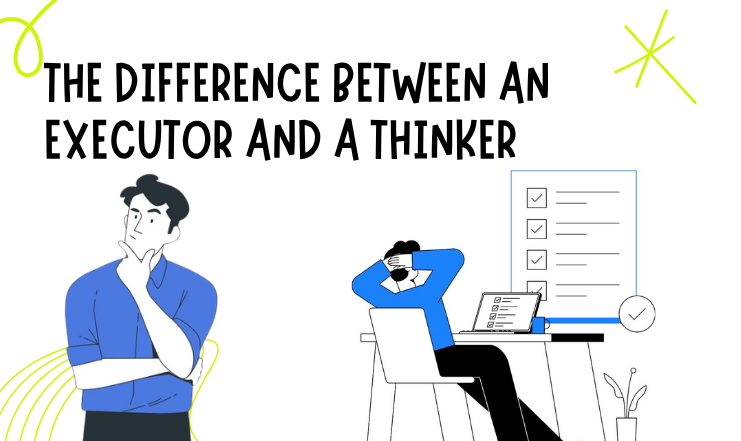
The Difference Between an Executor and a Thinker
Imagine two people working on the same project.
Both know the same tools. Both are equally talented. Both deliver fast.
But one simply follows the brief.
The other asks:
- What is the real problem here?
- What are people missing?
- Why are customers not responding?
- What is everyone else doing — and why should we do something different?
Here is a real example. A digital marketing agency briefs two people to fix a campaign with low conversions. The executor changes the button colour, tweaks the headline, runs an A/B test. The thinker asks why people are dropping off — and discovers the landing page promises something the ad never mentioned. One delivered a task. The other solved the actual problem.
The first person becomes a worker. The second person becomes a strategist.
Over time, strategists become team leaders, creative directors, brand heads, consultants, and founders.
That is the real gap in today’s market. Not software skill. Thinking skill.
Why Thinking Skills Are Becoming Rare — And Valuable
We live in a time of abundant information and scarce thinking.
Answers are instant. Templates are everywhere. AI can generate options in seconds. Tutorials can teach any software overnight.
But something else is quietly declining: deep cognitive ability.
Many people know how to execute. Fewer know what to execute. Very few know why.
They can follow instructions. They struggle to question them. They can copy trends. They rarely create direction.
And that is the gap companies feel today.
The five abilities companies are increasingly promoting people for are not design skills or marketing skills. They are thinking skills:
Insight — seeing problems others overlook, not just what is visible but what has been normalised.
Questioning — challenging assumptions before committing resources. Not “we used blue because it looks good” but “we used blue because our audience is skeptical and blue signals institutional trust.”
Connection — linking ideas across different fields. A tech founder applying hospitality principles to onboarding. A video editor adapting pacing from music. Innovation rarely comes from doing what everyone else does slightly better. It comes from combining ideas that were never combined before.
Structure — organising complexity into clarity. Turning a chaotic brief into obvious priorities. Turning a 50-slide deck into three clear arguments.
Judgment — knowing the difference between work that is finished and work that is good. Knowing when V1 is a starting point and when V3 is actually ready.
Most people never train these deliberately. They assume they will develop naturally with experience. They rarely do — not without a structured system.
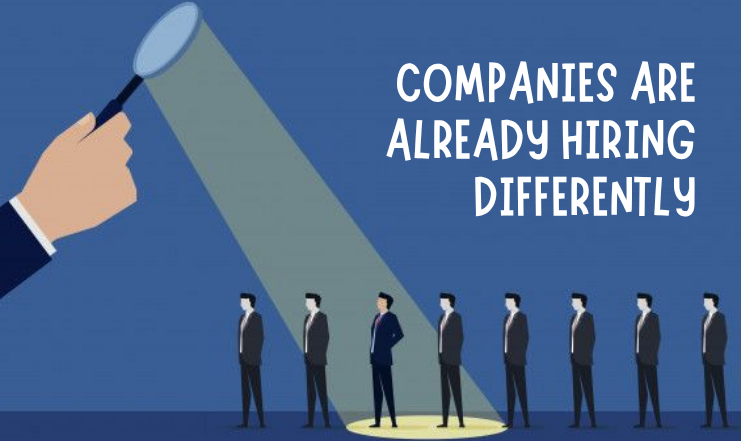
Companies Are Already Hiring Differently
Earlier, companies hired mainly for execution.
Today, they are increasingly looking for people who can solve problems, think independently, make decisions, spot patterns, and use AI intelligently instead of fearing it.
This is especially true in fields like graphic design, video editing, digital marketing, UI/UX, branding, and content creation.
The people who will win are not the ones who know the most tools. They are the ones who know what to do when the tools are not enough.
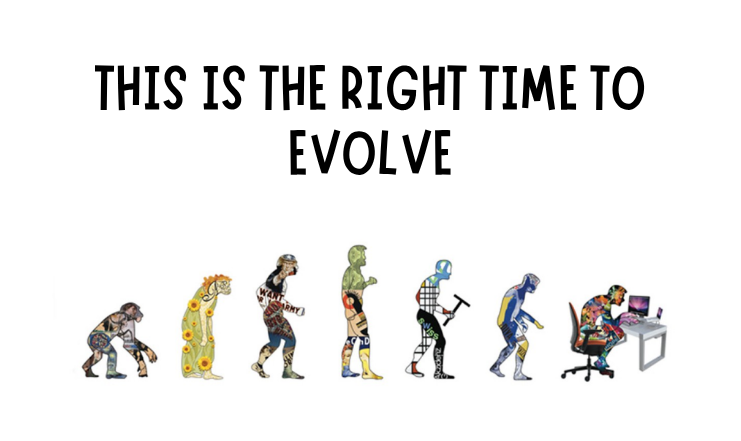
This Is the Right Time to Evolve
Many people are afraid of AI. But this moment is actually a huge opportunity. When the world changes, people who adapt quickly can leap ahead.
Most people will keep competing on speed — doing more work, faster, cheaper. But the smarter path is different.
Become the person who thinks deeper. Asks better questions. Sees what others miss. Gives direction instead of waiting for it.
Because tools will keep changing. Software evolves every few years. But the ability to solve problems, make decisions, and create meaningful work will remain powerful for life.

So What Is the Answer?
The answer is not more tools.
It is a system for better thinking.
At Video Superstars Academy, this is exactly what we teach — alongside the technical skills. We call it SPARK: a second-layer thinking framework built on five trainable cognitive skills — Spot, Probe, Adapt, Reconstruct, and Keep Iterating.
SPARK is not a creativity hack. It is a structured practice that develops the five abilities companies promote people for — and that AI cannot replicate.
Every time you work through SPARK, you are not just making better work. You are building the mental profile of someone who provides direction rather than waits for it.
Tools will keep changing. Thinking compounds.
The professionals who will thrive in the next decade are not the ones who learned the most tools. They are the ones who learned how to think when the tools ran out of answers.
That shift starts here.
Because in the AI era, software skills may get you hired. But second-layer thinking is what will keep you valuable.
Explore the SPARK series:
- The Rise of the Knowledgeable Rebel — Why the Best Creatives Question Everything
- Surface Thinking vs Second-Layer Thinking: Which One Are You Using? ● What Is SPARK? A Thinking System, Not a Creative Trick
- From Executor to Strategist: How SPARK Helps You Stay Relevant in the AI Era ● What Are Companies Actually Hiring For Now?
SPARK is the core thinking framework taught at Video Superstars Academy, Chennai. It trains creative professionals to move beyond tool skills — and develop the second-layer thinking that makes them genuinely irreplaceable.