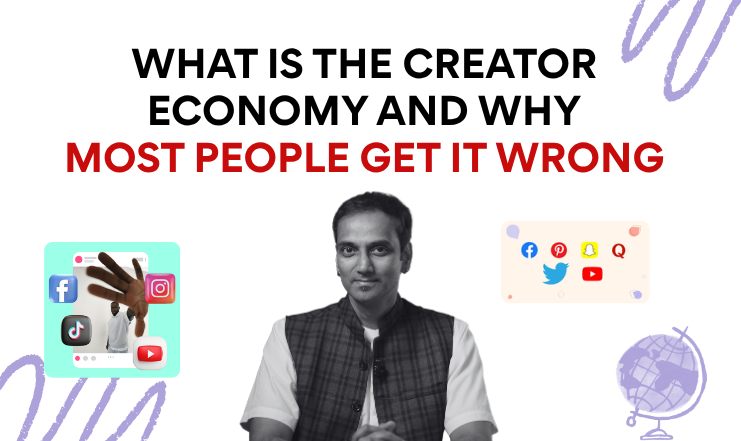

Everyone is talking about it. Your college seniors are posting about it. Influencers are selling courses around it. Even your parents have started asking about it.
But if someone asked you right now — what exactly is the Creator Economy? — could you answer clearly?
Most people cannot. And that gap between what they think it is and what it actually is — that is exactly where most creative careers go wrong.
Many young people are not entering the Creator Economy with clarity. They are entering with borrowed excitement. They see freedom, fame, flexibility, and fast money. They do not see uncertainty, repetition, invisibility, burnout, and the years it takes to become trusted.
That misunderstanding is costly.
So let us start from zero. No hype. No success stories. Just the truth
What the Creator Economy Actually Is
For a long time, if you had a creative skill — say you were a video editor, a graphic designer, or someone who could teach — there were only two ways to earn from it.
Option one: Get a job. Work for someone else. Fixed salary, fixed hours.
Option two: Freelance. Find clients, do projects, get paid.
That was it. Those were your only two paths.
Then something changed.
Platforms like YouTube, Instagram, and others created a third option. You can now build an audience directly — and that audience becomes your income. You do not need a company to hire you. You do not need clients to find you. You build content, a channel, a community — and people come to you.
That is the Creator Economy.
In the simplest words: the Creator Economy is a world where your skill, your knowledge, and your personality can directly earn you money — without a middleman.
A motion designer in Chennai posting reels of his work. A teacher making YouTube videos in Tamil. A fitness trainer doing Instagram lives. A developer writing a weekly newsletter about coding. All of them are part of the Creator Economy.
It is not just for entertainers. It is not just for people who dance on reels. It is for anyone who has something valuable to share — and the clarity to share it with purpose.
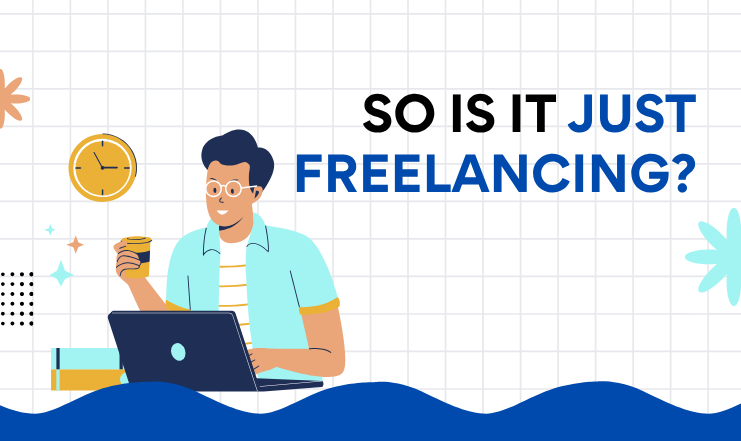
So Is It Just Freelancing?
This is the question most people ask first. And it matters more than people realise.
Freelancing and the Creator Economy are related — but they are not the same thing.
Freelancing works like this: you have a skill, you find a client, you do the work, you get paid, you find the next client. Your income depends entirely on how many clients you can find and how many hours you can work. The moment you stop working, the income stops. One client leaves — you are back to zero.
The Creator Economy works differently: you have a skill, you build content around it, you build an audience, that audience trusts you, and from that trust you earn in multiple ways — brand deals, your own courses, products, consulting.
Your audience does not disappear when one client does.
Here is the line that makes the difference clear:
A freelancer gets paid for delivering work. A creator gets paid for building trust at scale.
Or said another way: freelancing sells your time. The Creator Economy rewards your trust, your positioning, and your repeatability.
That is a fundamentally different game. One has a ceiling. The other compounds.
Freelancing is not bad — it is actually how most successful creators started. It provides income while you build something larger. But freelancing without a plan, with no vision beyond the next project, is where people get stuck at year two and three wondering what went wrong.
Freelance with a plan = Creator Economy. Freelance without a plan = just surviving.
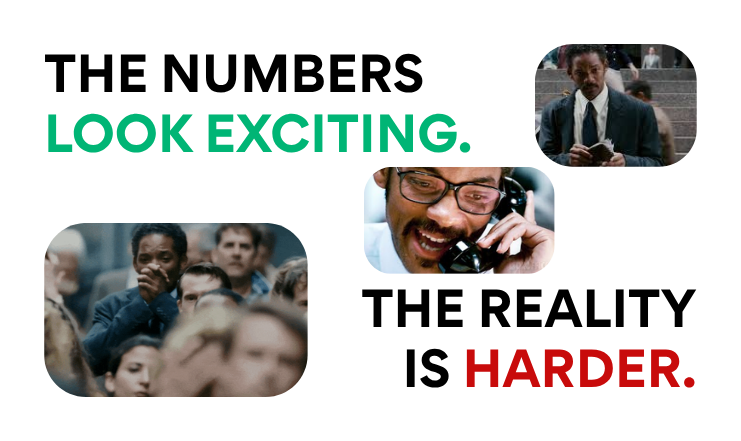
The Numbers Look Exciting. The Reality Is Harder.
Now let us look at the full picture — because the numbers you see on motivational posts are only half the story.
India’s creator economy is genuinely massive. According to a BCG report released in 2025, Indian creators currently influence over $350 billion in consumer spending every year. By 2030, that number is expected to cross $1 trillion. Globally, Goldman Sachs estimates the creator economy will be worth $500 billion by 2027.
The opportunity is real.
But here is the number nobody puts in their Instagram caption:
In India, only 8 to 10 percent of creators are earning meaningful income.
That means 9 out of every 10 people who call themselves creators are not making real money. Globally, 59 percent of beginner creators have not monetised at all. Most creators take five or more months before their very first earning — months of scripting, editing, posting, and chasing the algorithm with zero income coming in.
So why does everyone talk about this like it is a guaranteed path? Because success stories get shared. The struggle does not.
What Nobody Tells You About Running a Creator Business
Here is something that surprises almost everyone who enters this space.
When you become a creator, you are not just a creative person. You are suddenly running a small business.
You are doing your own marketing, your own brand negotiations, your own taxes, your own product design. Studies show that creators spend 54 percent of their time on non-creative tasks — more than half their time not creating at all, but managing operations.
Most people sign up to make videos. They do not realise they are signing up to be a CEO.
And then there is the platform problem. A single algorithm change can cause a 50 to 70 percent drop in your reach overnight. Your audience lives on a platform you do not own. One policy update, one major shift — and years of work can be disrupted in days.And then there is AI. 91 percent of creators are already using AI tools for editing, writing, and designing. If your only value is that you can execute a task — AI is already doing that task faster.
In the coming years, creators who only know how to produce will struggle. Creators who know how to position, package, and think will become far more valuable.
The question is which one you are building yourself to be.
The Trap Most Young Creators Fall Into
Every month, talented and passionate people make a decision that hurts their creative careerbefore it even begins.
They finish a course. They buy a camera, a mic, a ring light — sometimes on EMI. They set up a corner of their room as a studio. Then they start watching a creator with lakhs of followers, doing brand deals, travelling, living what looks like a free and exciting life.
And they think: if I copy what they are doing, I will get there too.
It is an understandable feeling. But here is what nobody tells them.
What looks like freedom from the outside is often years of invisible struggle on the inside.
That creator built their audience three, four, maybe five years ago. The platform was different. The competition was less. The algorithm rewarded different things. The window they climbed through is not the same window that is open today.
People are copying someone else’s chapter ten while they are still standing at page one.
You cannot copy someone’s result by copying their current actions — because you are not starting from where they started. You are starting from today. Today is more crowded, more competitive, and more demanding of clarity and strategy than it has ever been.
Copying the what without understanding the why — that is the trap. And it is costing people years.
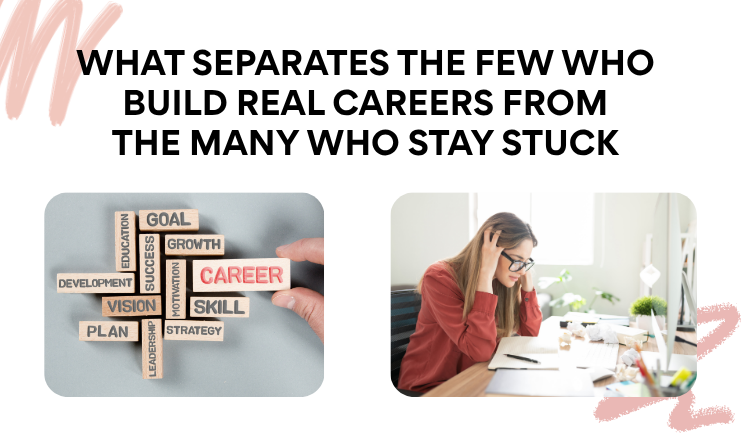
What Separates the Few Who Build Real Careers From the Many Who Stay Stuck
So what separates the few creators who build real careers from the many who stay stuck in activity without momentum?
It is not more followers. It is not better equipment. It is not even consistency alone.
It is how they think before they create.
Know exactly who you are talking to. Not everyone. Not “people who like design.” A specific person with a specific problem. The more precisely you define your audience, the more they feel like you are speaking directly to them — and that feeling builds trust faster than anything else.
Build multiple income streams from the start. Brand deals are volatile. A budget gets cut, a campaign ends, and income drops overnight. The creators who sustain build layered income — freelance work for immediate cash flow, brand collaborations, their own products, communities, consulting.
Own your audience — do not just rent it. Your Instagram followers live on Instagram’s platform, not yours. One algorithm change and your reach collapses. Build an email list, a WhatsApp community, a direct line to your audience that no platform can take away from you.
Play the long game. Consistency over years builds what virality cannot — credibility. The creators winning today started years ago and kept going when nobody was watching. This is a marathon, not a sprint.
Go deep on a niche, not wide on topics. The middle of the creator economy is getting squeezed. The ones breaking through are the most specific — not the most talented. One deep niche beats ten shallow ones every time.
Think before you create. Most creators ask: what should I make? The better question is: why will someone care about what I make? That shift — from execution thinking to strategic thinking — separates creators who build something real from those who stay busy and go nowhere.
The Future Does Not Belong Only to Creators
Here is the thing about the Creator Economy that most people miss.
It is not a playground for random content. It is a battlefield for clarity.
The winners will not be the loudest. They will not always be the most talented. They will be the ones who understand people deeply, position themselves wisely, and keep building long after the applause is absent.
That is why the future does not belong only to creators.
It belongs to creator-strategists.
People who combine creative skill with strategic thinking. Who do not just make content — but make decisions. Who know why they are creating before they ever open a camera or a software.
And that kind of thinking is not something you accidentally develop. It is something you deliberately build — through the right education, the right projects, and the right framework applied consistently over time.
That is exactly what ViSA builds into every student through the SPARK thinking framework —
before they ever touch a software or start a project. Because skill alone is no longer enough. In
a world where execution is being automated, thinking is the only skill that compounds.
The Creator Economy needs more thinkers.
The question is whether you will be one of them.
At Video Superstars Academy, we teach Freelance Video Editing, Motion Graphics, and creator-focused programs from our branches in Ashok Nagar, Annanagar, and Velachery, Chennai. All courses are built around the SPARK thinking framework — because skill is common, but thinking is rare.